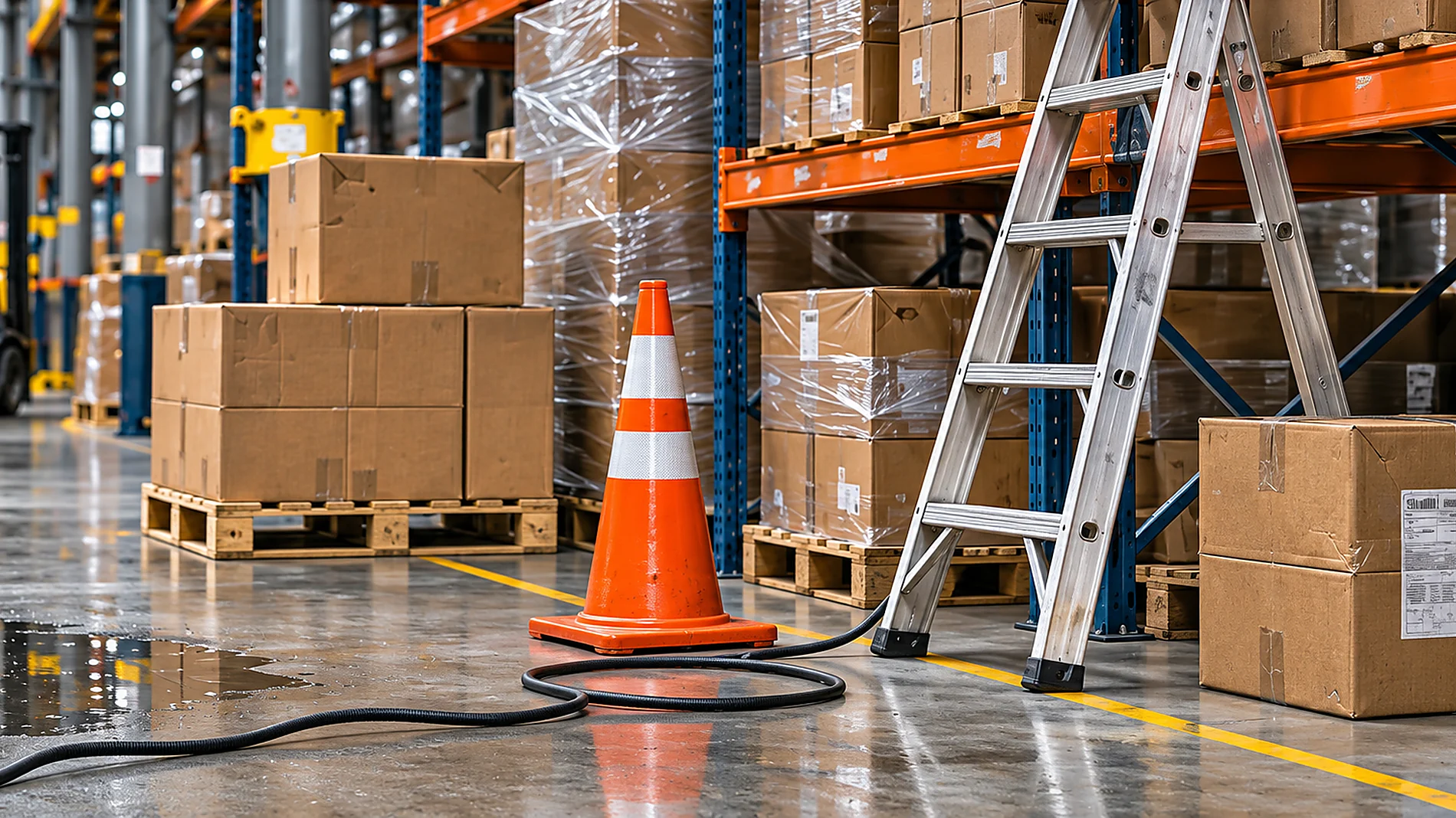
A warehouse aisle can look ordinary at first glance: pallets waiting to be moved, a ladder near the shelving, a forklift in the distance, and a traffic cone beside a work area. Look more carefully and the floor may tell a different story. A wet patch, loose cable, or box left beside a route can turn routine movement into a preventable incident.
Warehouse floor safety depends on recognizing hazards early and correcting the conditions that allow them to return. This Spot the Hazard guide uses a representative warehouse scene as a learning exercise. It does not describe a verified workplace accident or claim that a particular facility violated a regulation.
Start With the Scene, Not the Warning Sign
Imagine walking into a warehouse aisle during a busy shift. The concrete floor reflects overhead lights. A black hose crosses part of the walking area. An orange cone marks a section of the floor, while a portable ladder is positioned beside pallet racking. Stacks of cartons sit near the vehicle route.
Before identifying anything else, ask where pedestrians need to travel, which areas forklifts use, and whether there is a clear path to exits and workstations. A condition that appears minor in an empty photograph may become serious when employees carry materials or encounter moving vehicles.
Hazard 1: Liquid on the Walking Surface
A visible puddle can reduce traction and contribute to slips. The source matters: it might come from tracked-in rain, a leaking pipe, cleaning activity, or a piece of equipment. Simply wiping the floor may be insufficient if the condition keeps returning.
OSHA’s walking-working surfaces rule addresses clean, orderly surfaces, dry floors to the extent feasible, routine inspections, and correction or guarding of unsafe conditions. Cleanup, leak repair, drainage, and temporary access restrictions may all play a role.
Hazard 2: A Cable or Hose Across the Floor
A loose line may catch a shoe, become tangled with moving equipment, or be damaged by traffic. Determine what it serves and whether it can be routed overhead, protected, relocated, or eliminated from the walkway.
A cone near a cord does not necessarily protect a person walking from another direction. The goal should be to remove the trip hazard or physically separate people from it, not to rely entirely on noticing a warning.

Look Above Floor Level, Too
Hazard 3: An Improperly Positioned Ladder
A ladder beside shelving deserves questions about its condition, stability, purpose, and exposure to vehicle traffic. Is it being used on level ground? Is its position protected from forklifts? Can a worker maintain safe contact while climbing?
OSHA’s ladder standard includes rules about inspections, stable surfaces, intended use, and protecting ladders in passageways or other locations where traffic could displace them.
Hazard 4: Boxes in a Travel Route
Cartons placed on the floor can narrow an aisle, block visibility, or tempt pedestrians to move into the forklift lane. Materials should be stored in designated locations that do not obstruct travel routes, exits, or access to safety equipment.
Supervisors should look for recurring reasons boxes end up in the wrong place. Perhaps overflow storage is inadequate, a staging zone is too far from the task, or collection schedules do not match actual shipping volume.
Hazard 5: Forklift and Pedestrian Interaction
A forklift in the background becomes relevant when people must cross or work near its route. Visibility, rear swing, turning radius, and stopping distance all matter. A wet floor can further affect safe travel.
OSHA recommends separating pedestrians and powered industrial trucks wherever possible. For a deeper guide, see Forklift Safety in Busy Warehouses.
Why Warning Cones Are Not the Whole Answer
Cones can alert people to temporary work or unsafe conditions, but they do not correct a leak, prevent every approach to a hazard, or solve a poor traffic layout. A warning can be an interim measure while appropriate cleanup or repair takes place.
Prioritize Fixes That Remove the Hazard
A stronger response might involve repairing the leak, securing cable routes, providing appropriate material staging, installing barriers, or redesigning pedestrian paths. Controls should match the risk and remain effective across different shifts.

Check Whether Temporary Controls Are Working
If a spill cannot be corrected immediately, affected areas may need appropriate guarding or restricted access. Workers should know who owns the correction and how to report a change in conditions. Follow-up is especially important in busy aisles where a temporary warning can be moved or overlooked.
Turn a Hazard Hunt Into an Everyday Practice
A useful walkthrough asks employees to identify both immediate hazards and the conditions causing them. Take observations from the same routes workers actually use while receiving, picking, packing, cleaning, and shipping products.
Ask Workers to Explain the Workaround
A cable might cross an aisle because a piece of equipment was moved without relocating its power connection. Boxes might accumulate near racking because a designated staging area no longer meets demand. Addressing those causes can prevent repeated cleanup requests.
OSHA’s hazard-identification recommendations call for routine inspections, employee input, and verification that corrections have been made.
A Five-Minute Warehouse Floor Check
- Walk the normal pedestrian route and look for slip or trip hazards.
- Check whether cables, hoses, pallets, or cartons narrow travel paths.
- Inspect loading areas and floor changes that affect vehicles.
- Review ladder placement and protection from nearby traffic.
- Record defects, assign corrections, and confirm that hazards were controlled.
A short checklist is valuable only when staff have the authority and resources to act on what they find.
Use Photos Carefully as Safety Training Tools
Photographs can help teams practice observation, but a single image cannot confirm the full condition of a site. You may not know whether a ladder is actively being used, whether a barrier exists outside the frame, or whether a spill has already been isolated.
Present visual exercises as prompts for investigation, not proof of violations. When a hazard is suspected, inspect the actual conditions and apply the requirements relevant to that workplace.
Our article on building a lasting culture of safety explains why workers need confidence that reporting these observations will lead to constructive action.
Keep the Floor Safe After the Cleanup
Review repeated spills, damaged floor areas, obstructed routes, and near-miss reports to determine whether problems share a cause. A facility that has to place the same warning cone in the same location every shift likely needs a more durable solution.
Ask whether storage patterns, equipment placement, cleaning schedules, and pedestrian routes still match the operation. Warehouses evolve quickly; floor-safety controls should evolve with them.
Final Takeaway
Warehouse hazards often appear in plain sight. Wet surfaces, loose cables, unstable ladder placement, misplaced cartons, and vehicle traffic can interact in ways that a single warning sign cannot resolve. Spotting these problems is the first step. Correcting their causes and checking that the fixes last is what makes a warehouse safer.