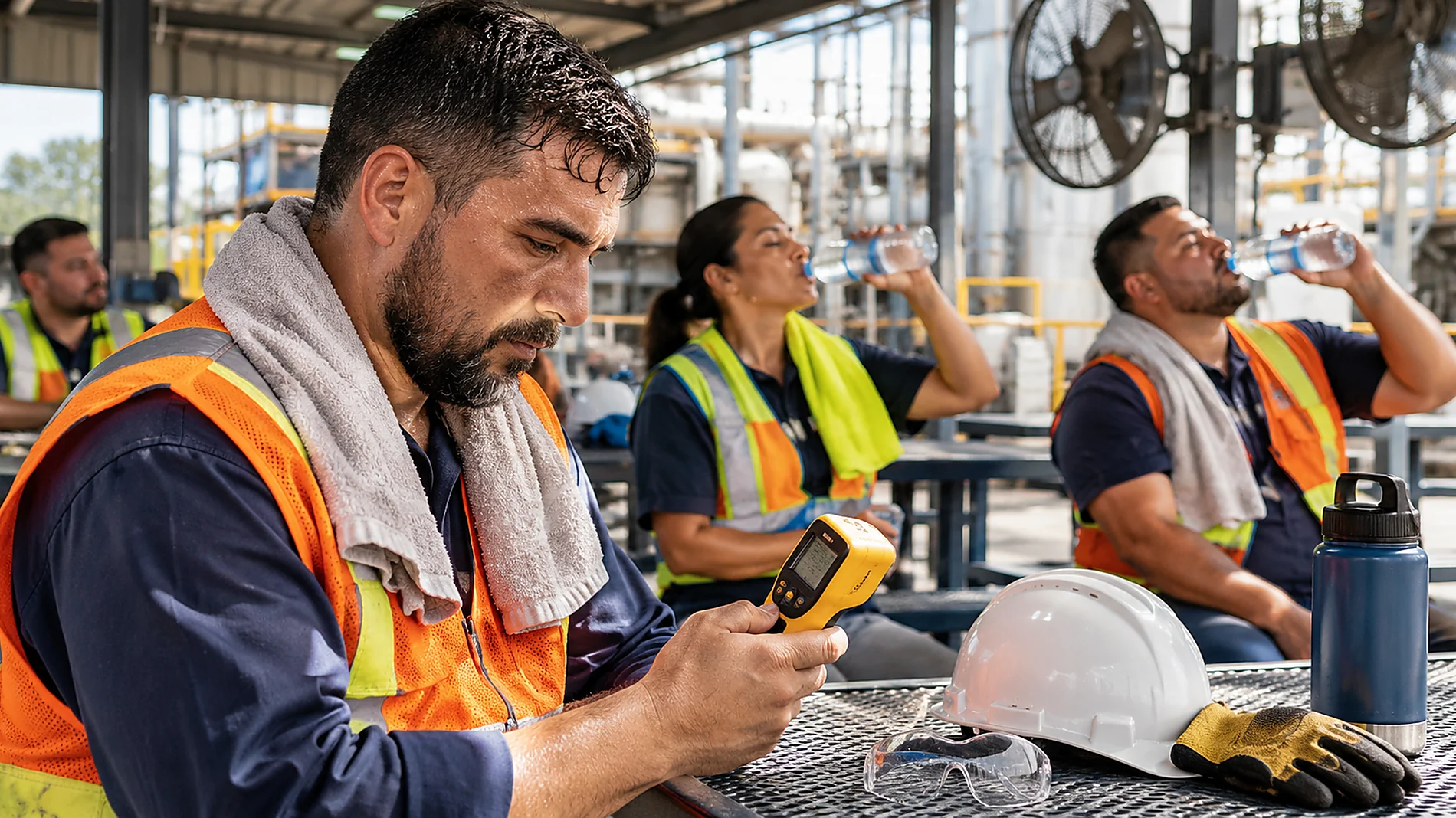
Heat stress is not limited to construction sites or outdoor work in summer. Manufacturing plants, foundries, distribution centers, industrial laundries, and facilities with boilers or furnaces can expose employees to dangerous heat even when the weather outside seems manageable. Some workers face additional strain from physical exertion and the protective clothing their jobs require.
Managing heat stress in industrial environments begins with assessing actual workplace conditions rather than relying on a single temperature reading. An effective program considers heat sources, workload, humidity, air movement, acclimatization, cooling opportunities, and emergency response.
What Creates Heat Stress Indoors?
Industrial heat exposure has several components. Equipment may radiate warmth into nearby work areas. High humidity reduces the body’s ability to cool through sweat evaporation. Limited air movement, demanding tasks, and insulating protective clothing can increase physiological strain.
Two employees in the same facility may experience different levels of exposure. One could work near an oven while another performs a lighter task beside an air-conditioned control room. The assessment should reflect where and how people actually work.
The National Institute for Occupational Safety and Health (NIOSH) provides workplace heat-stress recommendations, including guidance on hydration, rest breaks, monitoring, and acclimatization.
Heat Exhaustion and Heat Stroke Are Different
Heat exhaustion may involve dizziness, weakness, headache, nausea, heavy sweating, and other signs. Heat stroke is a medical emergency that can include confusion, altered mental status, seizures, or loss of consciousness. A person with heat stroke may still be sweating.
NIOSH’s heat-related illness guidance explains the symptoms and first-aid response. When heat stroke is suspected, call emergency services immediately, begin rapid cooling, and remain with the worker until help arrives.
Why Experience Does Not Guarantee Protection
Experienced workers can still become ill during unusually hot conditions, after changes in work intensity, or when they return from time away. Medications, health factors, clothing, and other circumstances may influence vulnerability. Supervisors should not assume that employees who tolerated yesterday’s conditions will be safe under every future workload.
For broader context on workplace responsibilities, see our existing article about OSHA heat safety in 2026.
Build a Heat Prevention Program Around Real Tasks
Identify Hot Zones and Exposure Patterns
Map locations where equipment produces heat, air circulation is poor, or employees perform strenuous work. Include elevated platforms, mezzanines, loading areas, and enclosed maintenance spaces. Assess conditions during representative operating periods, not only during a quiet morning walkthrough.
Monitoring may involve appropriate environmental measurements and observation of workload, clothing, and work duration. A consumer weather app does not describe the heat load beside a production oven.
Improve the Environment Before Relying on Reminders
Where feasible, employers can evaluate insulation, radiant-heat shielding, local ventilation, cooled workspaces, equipment redesign, and other engineering changes. Their effectiveness depends on the specific process and building. Fans may not provide adequate cooling in every high-heat situation and can increase heat transfer under certain conditions.
Administrative controls may include adjusting schedules, limiting heavy work during high exposures, providing recovery breaks, and rotating tasks when appropriate. Necessary protective equipment should remain in use; instead, heat risks should be addressed while accounting for that equipment.
Provide Accessible Water and Recovery Areas
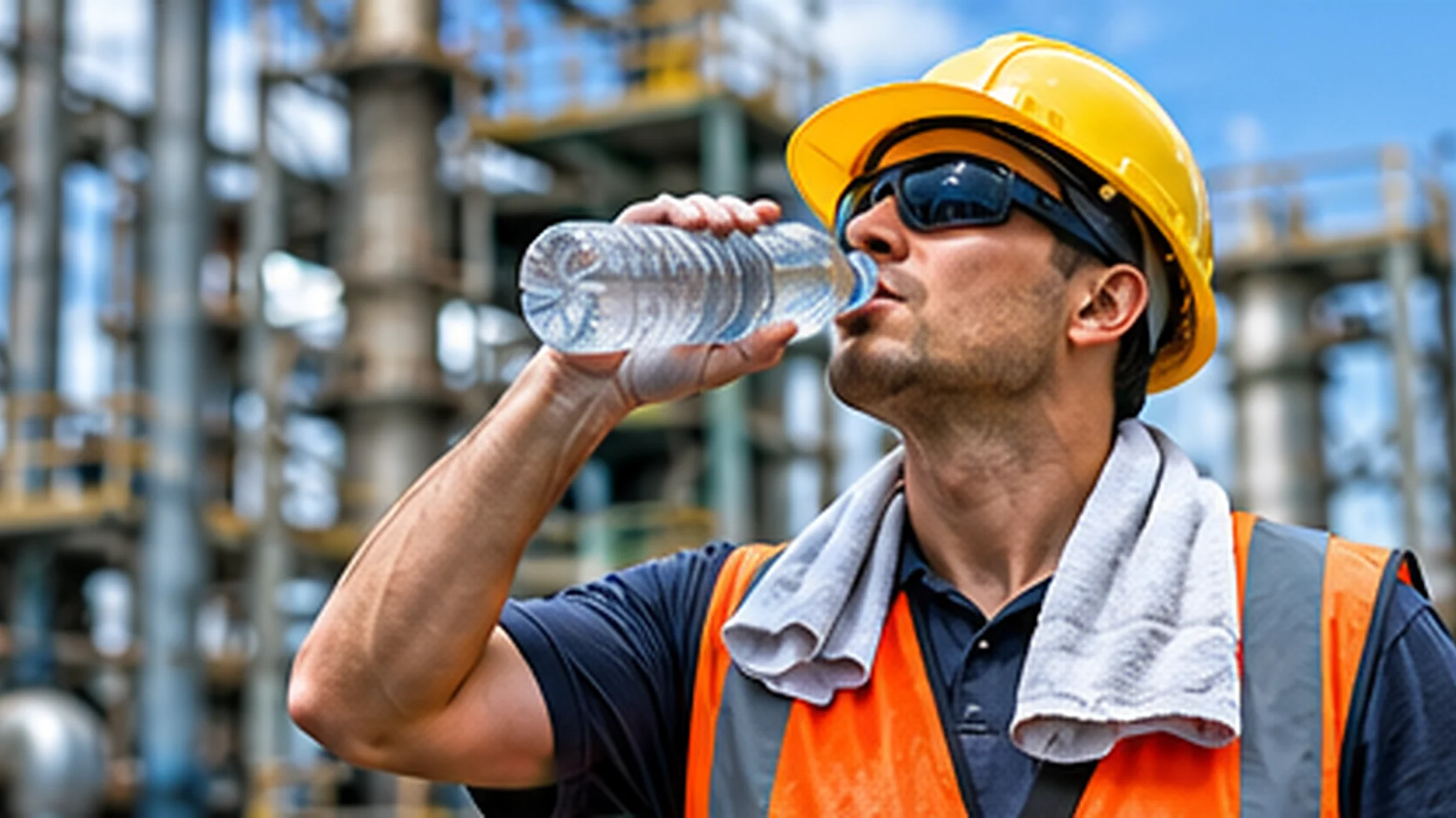
Workers need drinking water close enough to use throughout a shift, with appropriate rest opportunities in cooler locations. NIOSH recommends frequent hydration, including small amounts before thirst becomes intense, while emphasizing that needs vary with conditions and activity.
A water station on the opposite side of a large factory may be technically available but impractical during demanding production periods. Review how workers actually access supplies and whether staffing allows recovery breaks.
Acclimatization Is a Planned Process
The body can gradually adapt to repeated work in hot conditions. NIOSH’s acclimatization guidance advises gradually increasing exposure over roughly seven to fourteen days, with new workers generally requiring a more cautious schedule.
New and Returning Workers Need Different Attention
A person beginning a hot job may need more time to adapt than a colleague with recent experience. Employees returning after a substantial absence may have lost some acclimatization and should not automatically resume full exposure. Close supervision is especially important while workers adjust.
A Practical First-Week Check-In
Ask new workers whether the tasks feel manageable, whether cooling areas are accessible, and whether they understand whom to notify when symptoms appear. Train supervisors to recognize changes in behavior and to respond promptly, not just to check that an employee finished the assigned shift.

Recognize Emergencies Before They Escalate
A heat emergency plan should identify how workers request help, who contacts emergency services, where cooling supplies are located, and how responders reach specific production areas. Practice procedures with temporary employees, night-shift teams, and contractors as appropriate.
Do not leave a worker with concerning symptoms alone. If severe symptoms such as confusion or collapse occur, treat the situation as a medical emergency and begin cooling while obtaining professional assistance.
Make Reporting Safe and Straightforward
Employees should feel able to report symptoms or unsafe heat conditions without punishment or embarrassment. Co-workers can help recognize subtle changes in behavior, especially when heat affects concentration or judgment.
Heat risk also interacts with other workplace hazards. Fatigue and discomfort can matter around forklifts and machinery, making it useful to review our guide to forklift safety in busy warehouses.
Review the Rules Without Assuming a Proposal Is Final
Federal OSHA continues to publish materials concerning a proposed heat injury and illness prevention rule for indoor and outdoor work. A proposal is not the same as a final federal standard. Employers should verify current federal and state requirements that apply to their facilities and maintain appropriate heat-risk protections regardless of rulemaking status.
What to Review After Every Hot Period
Examine employee feedback, illness reports, areas with repeated complaints, measured conditions, and whether engineering controls and recovery schedules functioned as intended. Changes in machinery, shift lengths, or protective clothing should trigger reassessment.
Final Takeaway
Managing industrial heat stress takes more than distributing water bottles or posting summer reminders. Workplaces need realistic exposure assessments, effective controls, gradual acclimatization, accessible recovery opportunities, trained supervisors, and emergency plans that work on the actual production floor. Treat heat as an ongoing occupational hazard that changes with the task, not merely with the season.